


Chest Pain Isn’t “Just Reflux” Until It’s Checked
Hi Folks,
Dr. Tabibian here.
Recently in the news, a 47-year-old nurse in the UK went to the hospital with chest pain. She was told it was acid reflux and sent home. Three days later, she died from cardiac arrest. Horrible.
Why You Should Read This
- Roughly 1 in 5 adults has reflux symptoms at least weekly, which makes chest pain easy to write off as heartburn, at least statistically speaking
- Reflux can feel like more than heartburn. Chest pain, nausea, sore throat, or a lump-in-the-throat feeling can all be part of it
- Trouble swallowing, unexplained weight loss, or vomiting are concerning and not just routine heartburn, and they change what we do next
Why This Story Matters
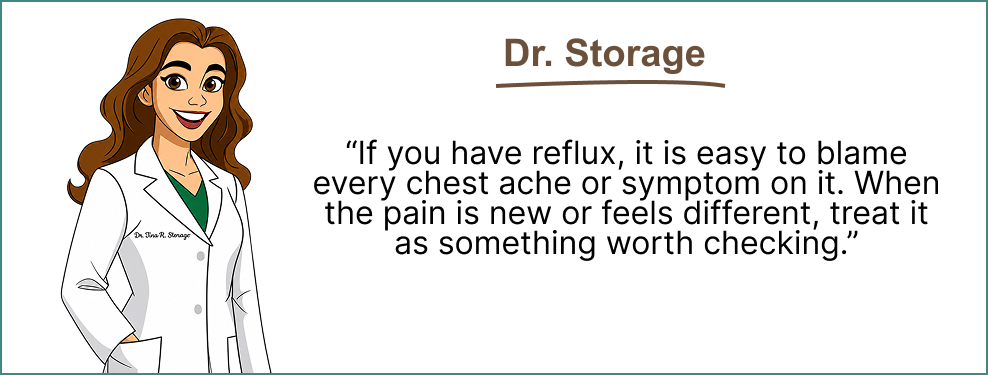
It happened overseas, but the lesson holds here too, as does the potential for oversight (i.e. missing something serious).
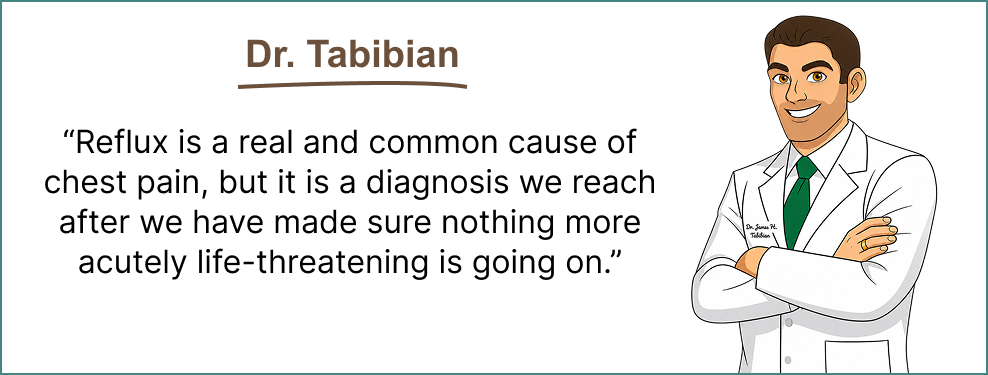
Reflux is so common that it is easy to assume, but it is a diagnosis reached after other causes are considered.
A GI’s View: Why Chest Pain Is Often Attributed to Reflux
Reflux is one of the most common conditions we treat in GI, and chest pain is a well-known symptom of it.
The esophagus runs right behind the breastbone (and right in front of the heart), so esophageal pain can feel like pressure, tightness, or burning in the middle of the chest.
That is why GI guidelines say a heart cause should be ruled out before chest pain is attributed to reflux.
What Makes a GI Take a Closer Look
Once cardiac and other emergencies are off the table, most people with typical heartburn start with a daily acid-reducing medicine for about 8 weeks.
We typically skip that step and go straight to an endoscopy (and/or other evaluation) when we hear:
- Trouble swallowing
- Unplanned weight loss
- Vomiting blood, black stools, or repeated vomiting
- Anemia, or symptoms that do not improve after the 8 weeks
This follows the American College of Gastroenterology guideline.
Takeaway: Reflux is a common and treatable cause of chest pain. However, it’s not necessarily the first conclusion to reach.
Until next time,
Dr. Tabibian